 English
 Български


- Tuesday, 06 August 2019
The project “Clean Technologies for a Sustainable Environment – Water, Waste, Energy for a Circular Economy” (Clean&Circle) for the establishment and development of a Competence Center presented its first scientific results at three forums in the country.
The project is funded by the Operational Program “Science and Education for Smart Growth,” co-financed by the European Union through the European Structural and Investment Funds.
One year after the start of the project, the scientific teams presented their first developed technologies to both Bulgarian and international audiences.
The water detoxification technology for waters containing toxic pollutants offers the creation of an algorithm for monitoring toxic pollutants in treatment plants. Developed by the team of the Faculty of Biology of Sofia University, the technology has already been coordinated with the associated project partner “Sofiyska Voda” AD, with whom broader joint activities are planned based on this technology—specifically, the study of the migration of toxic pollutants from the respective collectors to the treatment plant and then activating the process of their elimination there. “Sofiyska Voda” AD is ready to invest in this technology because it addresses a critical problem. There is already an active contract with “Sofiyska Voda” AD, entitled “From Living Water to a Circular Economy,” which includes these elements of technology research. A contract has also been signed with the Sofia Waste Treatment Plant, under which processes for detoxifying toxic pollutants from landfill leachate will be implemented at the plant, as these pollutants hinder the treatment facility's operation.
Another technology is also aimed at solving toxic pollutant problems. It involves pre-treatment and post-treatment with ionizing plasma—that is, before entering biological treatment, the waters are treated with ionizing plasma to reduce the concentration of toxic pollutants. After biological treatment, the waters are treated again with ionizing plasma for complete removal of the remaining toxic pollutants. The development is a joint effort of the teams from the Faculties of Physics and Biology of Sofia University. Currently, it is co-financed by project BG05M2OP001-1.002-0019 “Clean Technologies for a Sustainable Environment – Water, Waste, Energy for a Circular Economy” and by a National Science Fund project “NoDN08/8, 2016.”
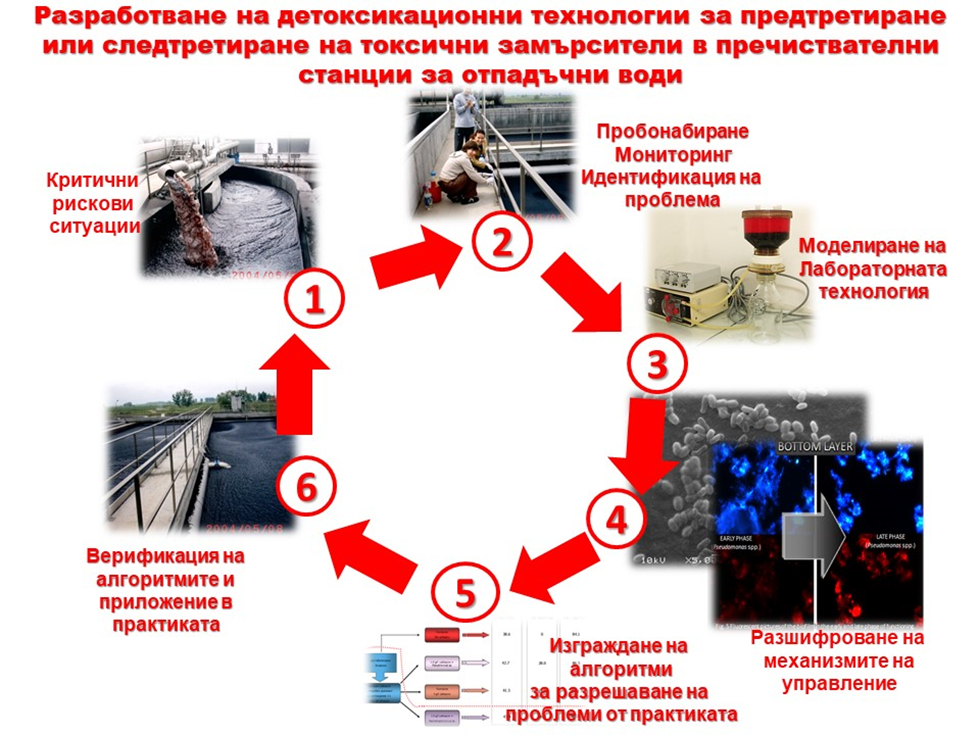
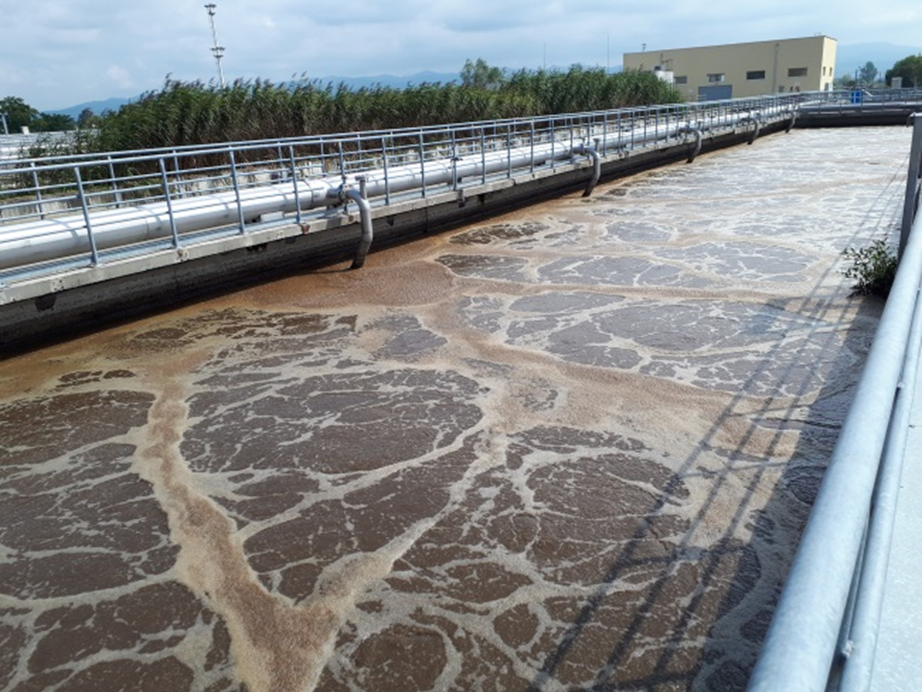
Biobasin at the Sofia Wastewater Treatment Plant “Kubratovo.” These facilities are the focus of the detoxification technologies described in the figure above.
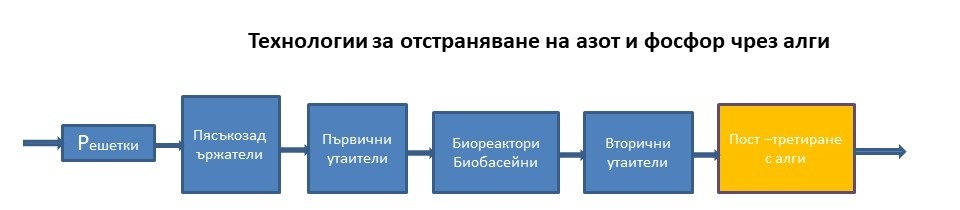
The technology developed by a team from the University of Architecture, Civil Engineering and Geodesy, a partner in the Clean&Circle project, proposes completing the treatment process with algae, which remove nitrogen and phosphorus from the treated water. The idea is to integrate this additional pollutant removal process into Sofia’s municipal wastewater treatment plant. The same approach can be applied in other treatment plants across the country.
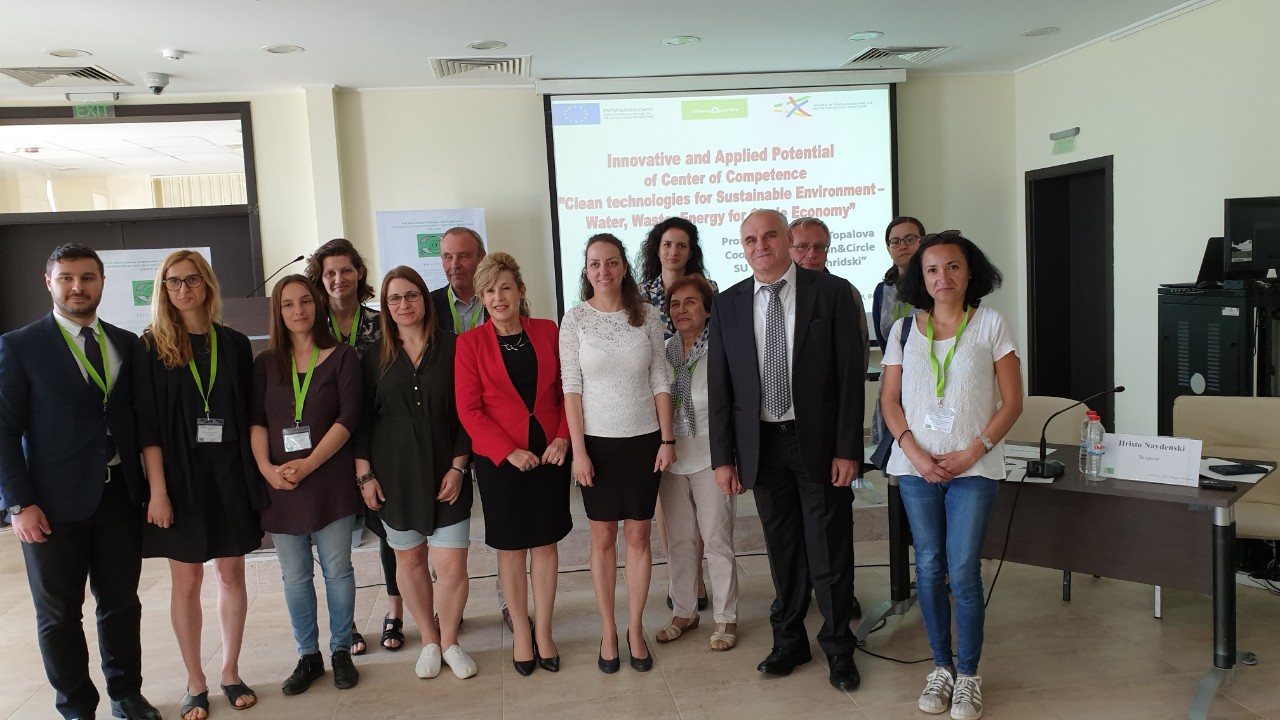
These three technologies were presented at an event organized by Sofia Municipality, an associated partner in the Clean&Circle project, as part of an international meeting for the “Circular Economy” project under the Interreg program. The project aims to identify the key players in Bulgaria who are interested in introducing circular economy technologies, connect them, and forward the information to responsible administrative bodies (mayors, deputy mayors, etc.) so that they can integrate policies and technologies into municipal development programs, particularly in waste recovery and recycling and water treatment. The meeting was attended by business representatives, municipal administration representatives, and representatives of other competence centers from the countries participating in the Sofia Municipality project. In addition to Bulgarian developments, technological solutions from the UK and Italy were presented at varying levels of readiness, with the aim of exchanging good practices and exploring potential opportunities for implementation.
The described technologies were also presented at the 6th International Conference with Youth Session “Environmental Engineering and Environmental Protection” (EEEP’2019), held in early June in Burgas. At the forum, in front of representatives of scientific communities from 12 countries, their scientific results were also presented by the Institute of Microbiology of BAS and “Prof. Dr. Assen Zlatarov” University – Burgas, partners in the Clean&Circle project.
The development by a team from the Faculty of Biology of Sofia University, “System for Controlling Methanogenesis Processes and Biogas Production with Molecular Fluorescent Techniques,” was proposed for funding from the Korean side at a working meeting of a Korean team with representatives of the Bulgarian scientific and business communities, held at the end of May. The system is ready to be automated, i.e., developed as a phone application, thus enabling the management of the most difficult-to-control microbiological process.
“Korea is looking for Bulgarian ideas and developments for commercialization. It is always the right time to support good ideas. That is why we are here, and we very much hope our mission will succeed,” said the General Director of the Global Commercialisation Centre of the Korea Advanced Institute of Science and Technology (KAIST), YoungDuk Park, Ph.D., at the opening of the working meeting of the Korean team with representatives of the Bulgarian scientific and business community. The meeting was organized by The Edge, the startup of JA Bulgaria, which hosted the event. KAIST’s budget is USD 745 million, allocated to supporting projects and ideas in Korea and 34 countries on five continents. The funds come from the Korean government, venture funds, and businesses. KAIST’s role is to identify scientific results and connect businesses with scientists. They primarily fund projects in the IT sector, clean technologies, big data processing, agribusiness, robotics, and smart cities. KAIST is the largest technology transfer center in Korea. It is part of the country’s largest technical university. KAIST’s idea is for Bulgaria to become their hub for Europe, and in this regard, they showed interest in the Clean&Circle Competence Center under construction, presented by the project coordinator, Prof. Yana Topalova from the Faculty of Biology of Sofia University.
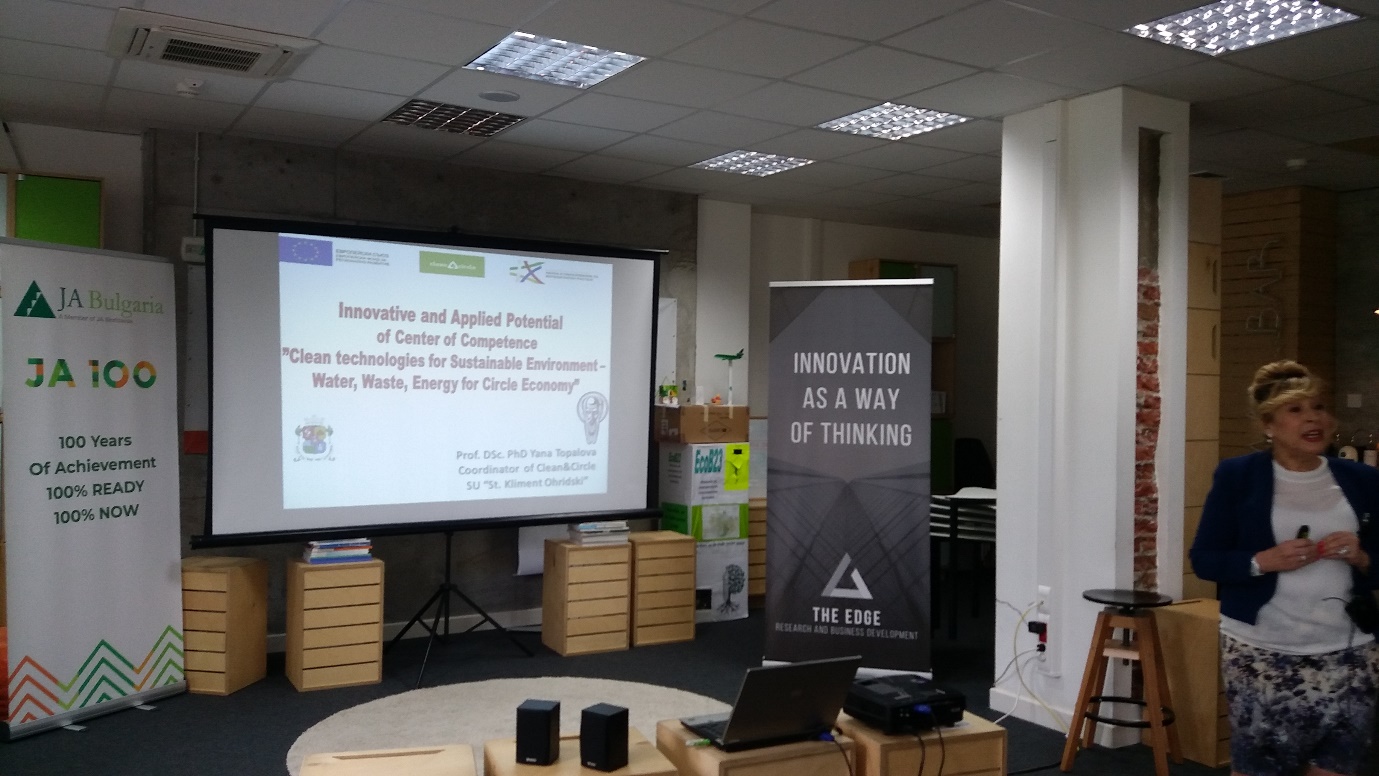
The main goal of the project “Clean Technologies for a Sustainable Environment – Water, Waste, Energy for a Circular Economy” (Clean&Circle) is to build effective infrastructure and research capacity for the development of innovations in the circular economy, focusing on water, energy, and waste management. The expected result is a modernly equipped and functioning Competence Center that meets the needs of science, the economy, and education in the respective fields.
The total value of the project is BGN 23,667,925.86, of which BGN 20,117,736.97 is European co-financing and BGN 3,550,188.89 is national co-financing.
The project implementation period is from March 30, 2018, to November 30, 2023.
The project beneficiary is Sofia University “St. Kliment Ohridski” with partners: University of Architecture, Civil Engineering and Geodesy; University of Forestry; “Prof. Dr. Assen Zlatarov” University – Burgas; Institute of Physical Chemistry – BAS; Institute of Organic Chemistry with Centre of Phytochemistry – BAS; Institute of Microbiology – BAS; Cleantech Bulgaria Foundation.
Associated partners in the project are: Sofia Municipality, “Sofiyska Voda” AD, Interplast BG EOOD, Energy Agency – Plovdiv, University of Modena, Italy.


